


That was the thought of a subsidiary of the wellknown South Korean corporation LG, which mainly deals in infrastructure projects and entrusted the German steam turbine specialists, M+M Turbinen-Technik, with the construction and development of an individual steam turbine installation.
In this project, getting stuck in, or using steam, meant not allowing the excess steam in a dairy factory in Sejong City be unused in futures, but to exploit it to generate electricity. This was not a problem for the experts at M+M. Because customised steam turbines with individual solutions are the company’s hobbyhorse. As a result, the turbine was developed by the experienced engineers and built in record. But to whom should they entrust the transport of the valuable and customised steam turbine from Bad Salzuflen in eastern Westphalia to the city in South Korea, 8,000 kilometres away?
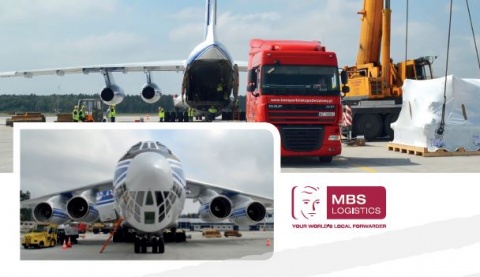
MBS and the project loading specialist Dario Romao, who submitted a coherent and cost-effective transport concept for the 25 tonne turbine (volume weight 35 tonnes) and packed in 9 crates, won the order. The massive crates (535cm x 320cm x 280cm) were collected in two open plateau HGVs and her chartered a reliable IL-76 from the Russian air carrier Volga Dnepr on behalf of the client. A crane with a dead weight of 80 tonnes was used for loading; it safely stowed the valuable goods onto the cargo plane. But not, as planned, at Leipzig airport … because it was the end of May 2016. The political situation between Russia and Germany was becoming increasingly precarious and the overflight rights over Russian territory had been temporarily suspended for commercial consignments. Suddenly the situation had become hot! A tightly scheduled timetable and an engineer team in Korea relying on the important delivery required an alternative solution at short notice.
Within a few hours, Romao had the solution: an airport in Poland. He rerouted the transport and organised departure from SZZ Stettin airport to circumvent the problematic zone of Russia.
The turbine finally arrived at its destination I South Korea without any problems and is now being successfully used for sustainable energy generation and pressure regulation.
